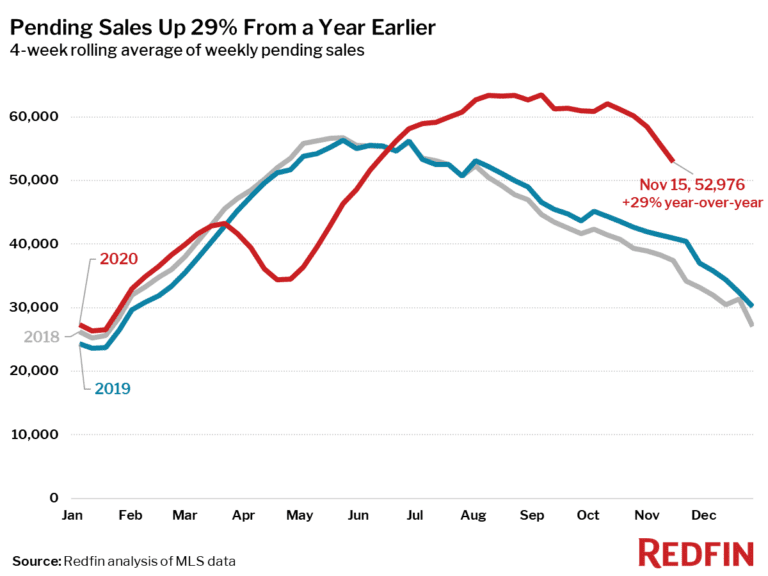
Housing Market Update: Homebuying Picks Up After Election Week, Pending Sales Up 29% From 2019
The U.S. housing market continues to soften a bit in November, even though activity picked up in the week after the election.


The U.S. housing market continues to soften a bit in November, even though activity picked up in the week after the election.
Did the 2020 housing market peak in October? Home prices rose 14% year over year to $335,900—the 2nd-largest annual increase on record.
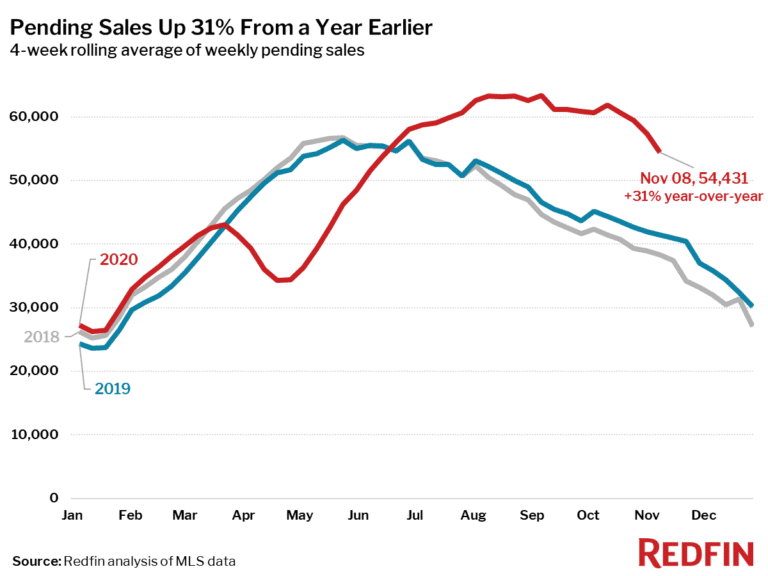
Housing Market Update: Home Prices Climb 15% Even as Growth in Pending Sales Slows

Home price growth continued unabated as continued homebuying demand drove home prices up 15% from a year earlier.
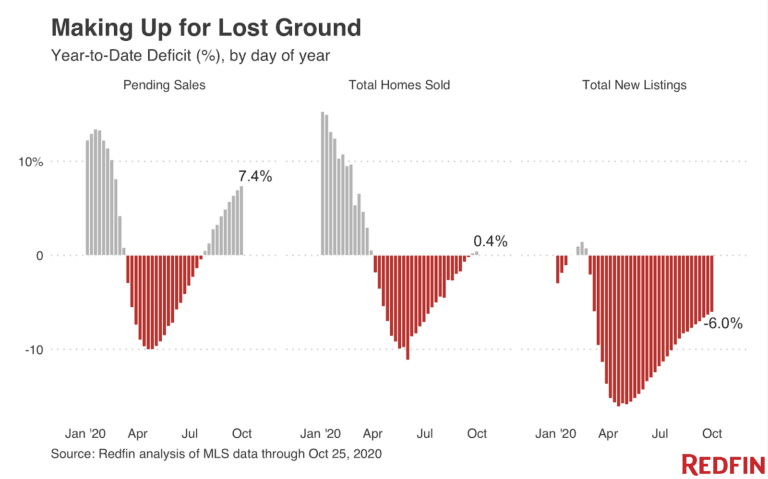
The U.S. housing market continues to see strong demand with pending sales up 34%, driving home prices up 15% from a year earlier.
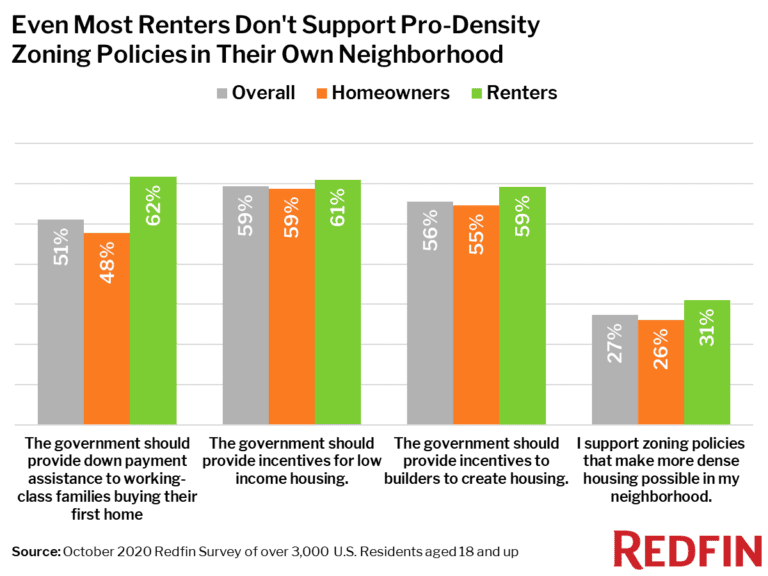
Over half of U.S. residents support pro-housing government programs, but only about a quarter support allowing more density in their own neighborhood.
The U.S. housing market continues to soften a bit in November, even though activity picked up in the week after the election.
Did the 2020 housing market peak in October? Home prices rose 14% year over year to $335,900—the 2nd-largest annual increase on record.
Housing Market Update: Home Prices Climb 15% Even as Growth in Pending Sales Slows
Home price growth continued unabated as continued homebuying demand drove home prices up 15% from a year earlier.
The U.S. housing market continues to see strong demand with pending sales up 34%, driving home prices up 15% from a year earlier.
Over half of U.S. residents support pro-housing government programs, but only about a quarter support allowing more density in their own neighborhood.