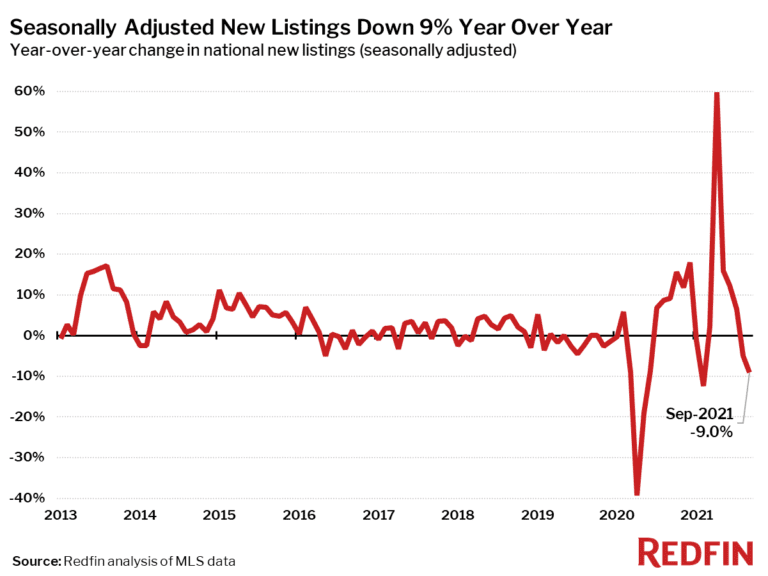
Fewer Homes for Sale in September; Declining Number of Listings Holds Back Home Sales
New listings of homes for sale fell 9% from a year earlier and closed home sales were down 5%.
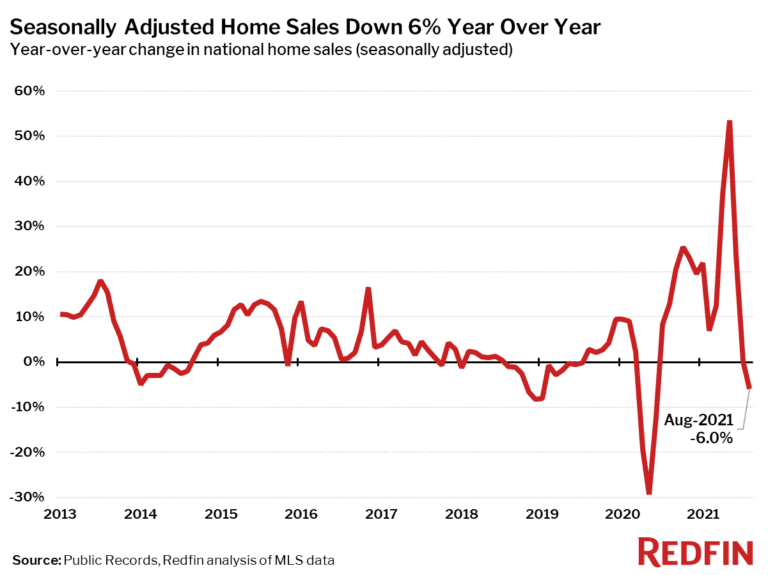
Home Sales Fell 6% in August, the First Annual Decline in 15 Months
However, home prices were up 16%, and new listings posted their first year-over-year decline since February, which could signal a tightening market.

July Marked 12 Straight Months of Double-Digit Price Increases
Still, housing market conditions improved slightly for homebuyers as competition eased off from the records set in June.
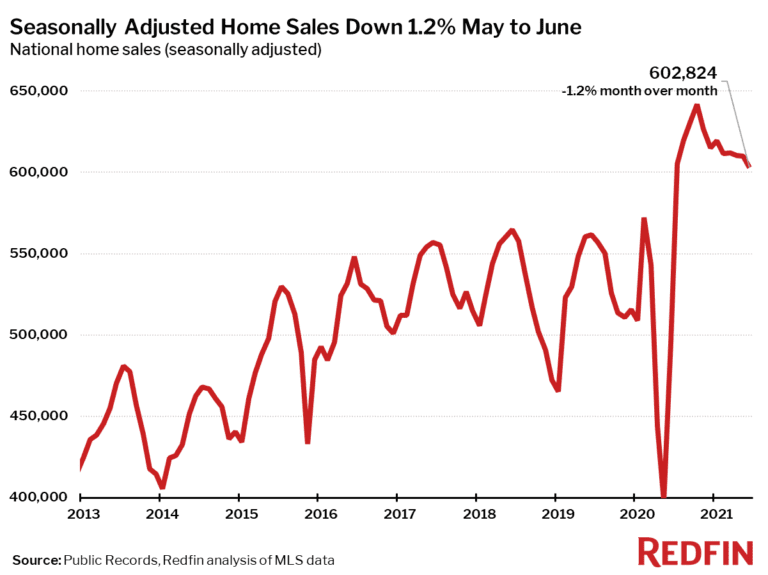
Home Sales Dipped 1.2% From May to June, the Largest Late-Spring Decline Since At Least 2012
Still, homes sold at their fastest pace and for their highest prices on record.
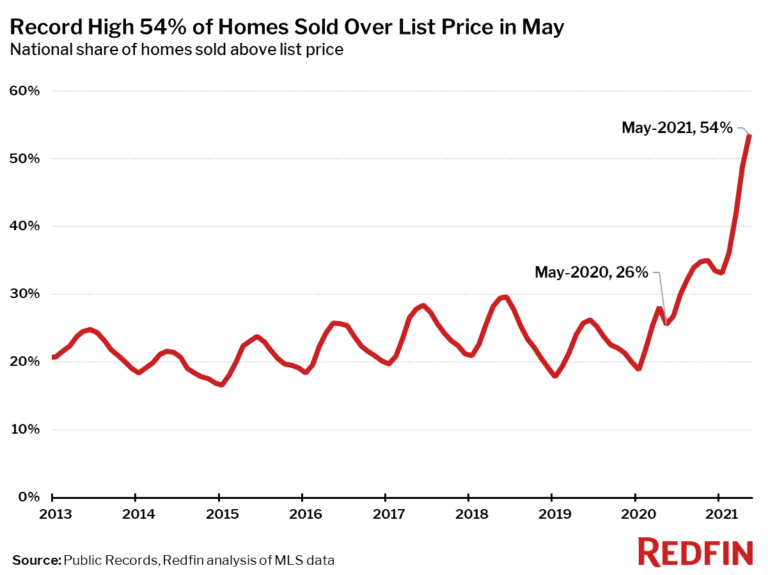
Over Half of Homes Sold Above List Price in May for the First Time On Record
Home prices were up 24%, a record high due to the dip in home prices at the start of the pandemic a year earlier.
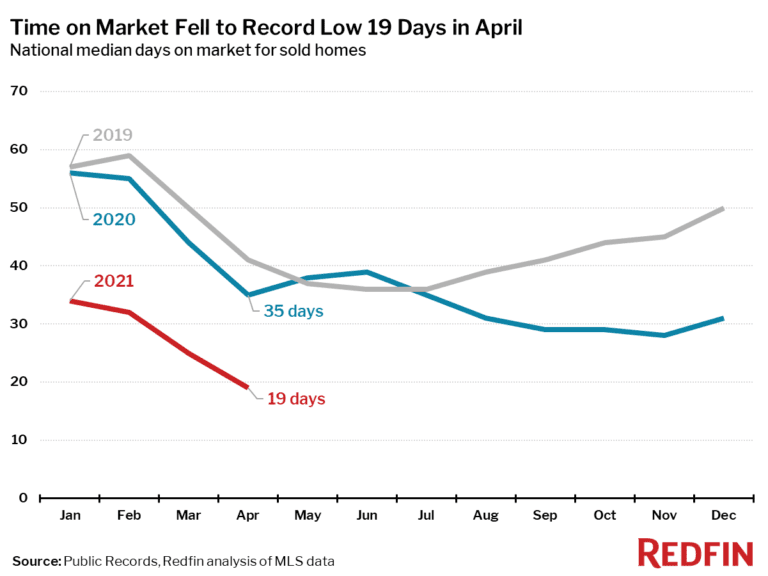
Buyers in Indianapolis, Omaha and Seattle are Snapping Up Homes in 5 Days or Less
Homes in Portland, OR and Denver are also selling in a handful of days. In Austin, 74% sold above list price. Nationwide, almost half of

June Housing Market Was the Fastest and Most Competitive on Record
Most homes in Denver sold in less than a week; 68% of San Jose homes sold above list price.
Housing Demand Fell 5 Percent in May
Early stage housing demand remained strong in May, with the number of Redfin customers requesting tours up 17.7 percent year over year.
The Housing Market Accelerated to its Fastest Pace on Record in May
Sales increased 7 percent, driven by growth in affordable metros
Housing Demand Fell 5 Percent in April Following a Year of Dwindling Home Supply
The Redfin Housing Demand Index fell 4.9 percent to 118 in April, the fifth consecutive month of year-over-year declines.
New Listings Fell Nationwide in April as Home Sales Declined in the West
Inventory dropped 3.2% extending a seven-month decline.

Mortgage Rules Are Hurting Affordable Rentals. Here's What We Can Do.
The riskiest investors aren’t who you might think, Urban Institute research finds.